

January 2016
Current and Future Revolution in Pathology Practice: (Focus on) Immuno-oncology and Cancer Epigenetics ASIP/ASCP will bring together 4 speakers from across two unique disciplines of pathology to discuss the practice, science, and challenges of immuno-oncology and cancer epigenetics intended to inform and education residents, fellows, and practicing pathologists. The course will begin with a practical [...]
Find out moreSupports research projects aimed at understanding the causes of breast cancer, prevention or developing new treatments for metastatic breast cancer
Find out more
Meeting Summary To maintain homeostasis, cells need to coordinate gene expression and metabolic state. There is increasing evidence that misregulation of metabolic flux and gene transcription plays a major role in human diseases, including obesity, diabetes and cancer. The aim of this meeting is to explore how metabolic state influences gene expression programs and, conversely, [...]
Find out more
Cancer Research UK seeks to attract the best postdoctoral researchers to perform groundbreaking cancer research. The purpose of the Research Travel Awards is to enable ambitious postdoctoral researchers to visit research groups elsewhere in the UK or overseas to: Introduce new expertise, techniques or skills to the travelling scientist’s current research group Establish or [...]
Find out moreFebruary 2016
Vaccines already exist that prevent cancers caused by infection, such as against the human papilloma virus that causes some cervical cancers. But this challenge is to develop vaccines that work against non-viral cancers, which are caused by faults in our DNA that accumulate over time. That’s what really makes this a Grand Challenge. Because cancer [...]
Find out moreAround 19 in 20 adults carry the Epstein Barr Virus (EBV), making it one of the most common human viral infections. In most people, EBV is relatively harmless, although it’s the cause of glandular fever, “kissing disease”. But in some parts of the world it’s a big problem – every year, EBV infection accounts for [...]
Find out moreCertain things in the world around us, such as tobacco smoke, cause cancer. They do this by triggering chemical changes inside cells, leading to errors in the reading of the DNA genetic code. The patterns of these DNA changes are different for each cause (or ‘carcinogen’) – almost as if they are signing their names [...]
Find out moreIt’s a hard concept to imagine, but not all of the things we call ‘cancer’ need to be treated. Some ‘cancers’ are temporary changes to cells that will reverse or disappear with time, and others are so slow-growing they’ll never cause any problems. For some cancers, over-diagnosis leads to unnecessary treatment and avoidable side effects. [...]
Find out moreCancer cells live in complex communities. Just like houses in a city, each cell in a tumour is different from its neighbour, and relies on infrastructure to support its existence. There are different neighbourhoods–some worse than others. Where we have roads, tumours contain blood vessels that deliver nutrients, and act as highways for different cell [...]
Find out moreMyc is a gene that is mutated and persistently switched on in the majority of human cancers – it’s a hallmark of the disease in nearly seven out of ten cases. Mutant and overactive Myc helps tumours survive, and this strongly suggests that blocking its function would be a powerful approach to treating many types [...]
Find out moreIn recent years, scientists have been experimenting with using large molecules called ‘macromolecules’ to target and destroy tumour cells. These macromolecules can disrupt the processes that cancer cells use to survive – for example by stopping them from growing or by flagging their presence to the body’s immune system. This approach works very well on [...]
Find out more
Purpose: to advance research in cancer etiology and early detection biomarkers, utilizing the advantages of the unique biorepository resources of the NCI-sponsored Prostate, Lung, Colorectal, and Ovarian Cancer (PLCO) Screening Trial
Find out moreMeeting Summary Over the past decade, there has been a greater understanding of genomic complexity in eukaryotes ushered in by the immense technological advances in high-throughput sequencing of DNA and its corresponding RNA transcripts. This has resulted in the realization that beyond protein-coding genes, there are a large number of transcripts that do not encode [...]
Find out moreMarch 2016
This 2-day conference will focus on the study of epigenetic changes in normal and diseased cells in response to internal or external factors with the aim to translate basic epigenetic research into diagnosis, therapy and prevention.
Find out more
Dear Colleagues, On behalf of the Organizing Committee, I am delighted to announce our International Symposium "Epigenetic Regulation of Skin Regeneration, Ageing and Disease", which we will organize in Bradford on March 17th-19th, 2016. Epigenetics Symposium Flyer The idea of the Symposium is to bring skin and chromatin biologists together and further promote the epigenetic [...]
Find out moreMeeting Summary The DNA of eukaryotic cells is organized into chromatin fibers, where the nucleosome is the basic repeating unit. Chromatin is thus at the core of fundamental processes such as gene regulation, stem cell fate determination and cancer. By and large, these topics have traditionally been covered by separated meetings. However, recent literature indicates [...]
Find out moreApril 2016
The NCI Ruth L. Kirschstein National Research service F30 Award supports promising doctoral candidates who will perform dissertation research and training for an MD/PhD degree in a scientific health-related field relevant to the mission of the NCI during the tenure of the award. Applicants for the F30 must be within 48 months of matriculation into [...]
Find out more
Targeting epigenetic modifiers and readers, particularly histone methyltransferases, demethylases and bromodomain-containing proteins have recently set the foundation for a new generation of anti-cancer drugs. Over the past few years, several companies have developed and successfully moved novel compounds targeting EZH2, DOT1L, LSD1, and a collection of BET bromodomain inhibitors into clinical studies. As these compounds [...]
Find out more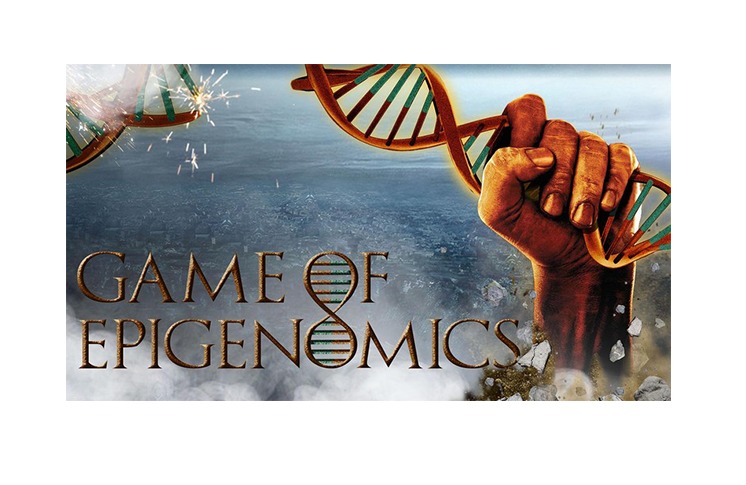
The ‘Game of Epigenomics’ conference will celebrate the great diversity in the epigenomics field, reflecting both on DNA and protein modifications. The conference will host international and national leaders in the field, covering the spectrum of epigenomic research, presenting data from diverse model systems as well as clinical research and new insights in disease epigenomics. [...]
Find out more